Insights

Perspectives on water and infrastructure systems, with a focus on resilience, adaptability, and long-term performance.

Decentralized Wastewater

When Sewer Exists but Capacity Doesn’t: The Case for Hybrid Wastewater Infrastructure

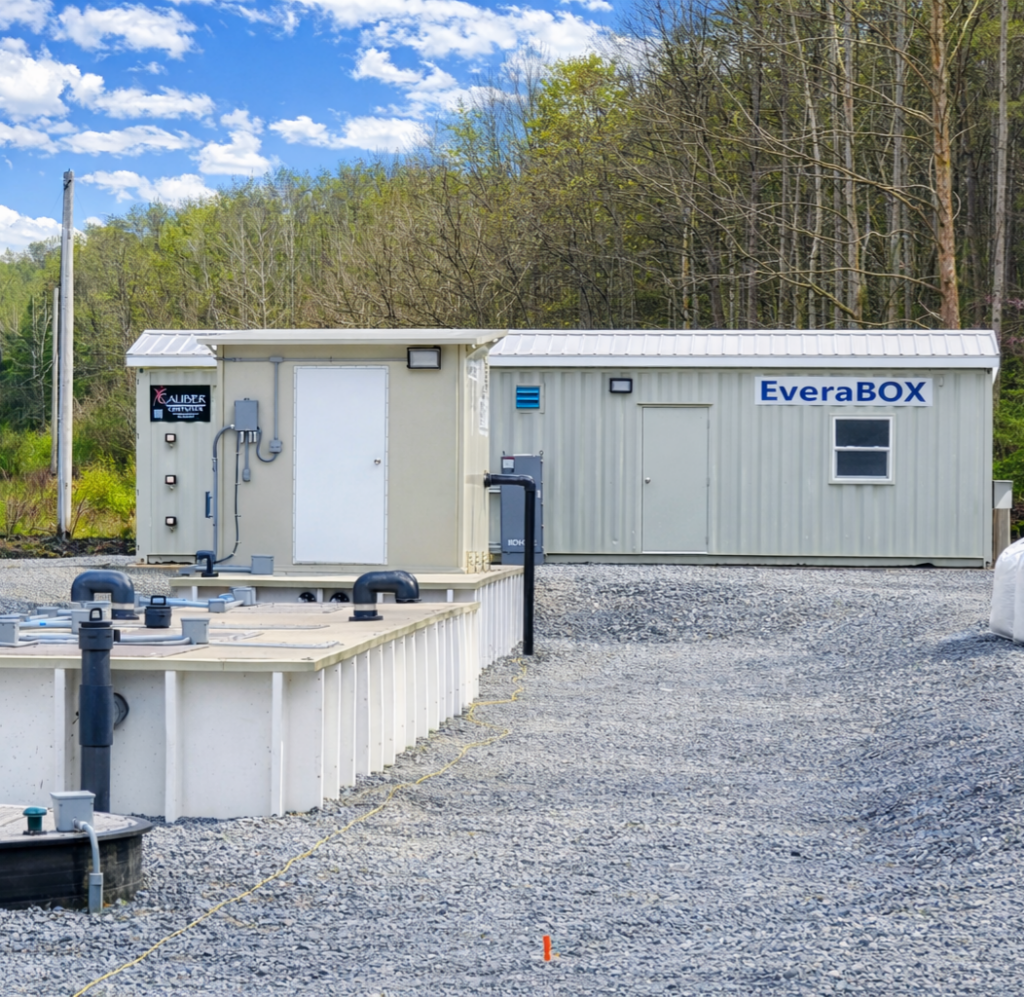
A sewer line may exist nearby. A utility may technically serve the area. But if downstream collection, pumping, or treatment capacity is limited, development can still stall. Hybrid wastewater infrastructure combines centralized utility service with decentralized treatment, modular pumping, reuse, or managed service models to help projects move forward when traditional sewer capacity is unavailable, delayed, or constrained.

Read More »
Wastewater Treatment Systems

When Sewer Isn’t There, Development Risk Changes Shape

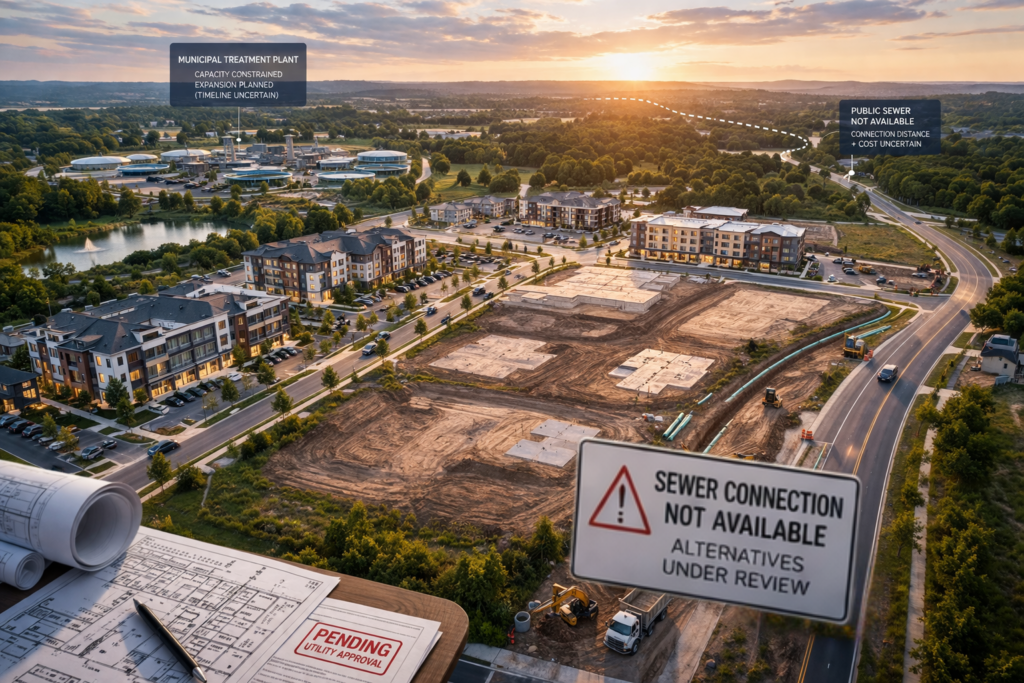
For decades, many land developers have treated water and sewer as a given. If the site was right, the market was strong, and the deal penciled, utility service was usually expected to follow. Connection fees were paid, the local provider was engaged, and the project moved forward. But that assumption is breaking down. Across more markets, developers are finding themselves in a very different position: the land works, the demand is real, the project is viable — but sewer is unavailable, delayed, capacity-constrained, or simply too uncertain to count on. And when that

Read More »
Water as a Service

💧 Water-as-a-Service (WaaS): A New Model for Delivering Critical Infrastructure

Water and wastewater infrastructure is rapidly emerging as a primary constraint on development across the United States. Aging centralized systems, increasing regulatory requirements, and limited utility capacity are creating a widening gap between project demand and infrastructure availability.

At the same time, many developers—particularly in small to mid-sized or decentralized projects—lack both the capital and the specialized expertise required to design, build, and operate complex treatment systems. This has led to delays, increased costs, and, in some cases, stalled or abandoned developments.

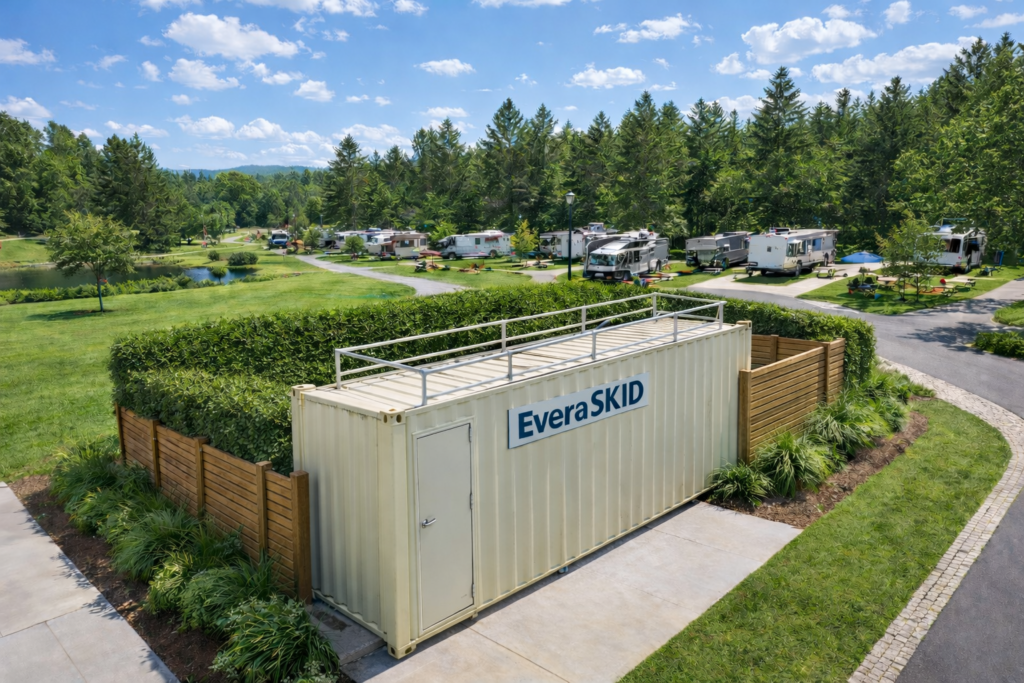
Water-as-a-Service (WaaS) represents a fundamentally different approach to infrastructure delivery. By

Read More »
Septage Disposal Challenges
Decentralized Wastewater

The Growing Septage Disposal Challenges Facing Wastewater Pumpers and Haulers

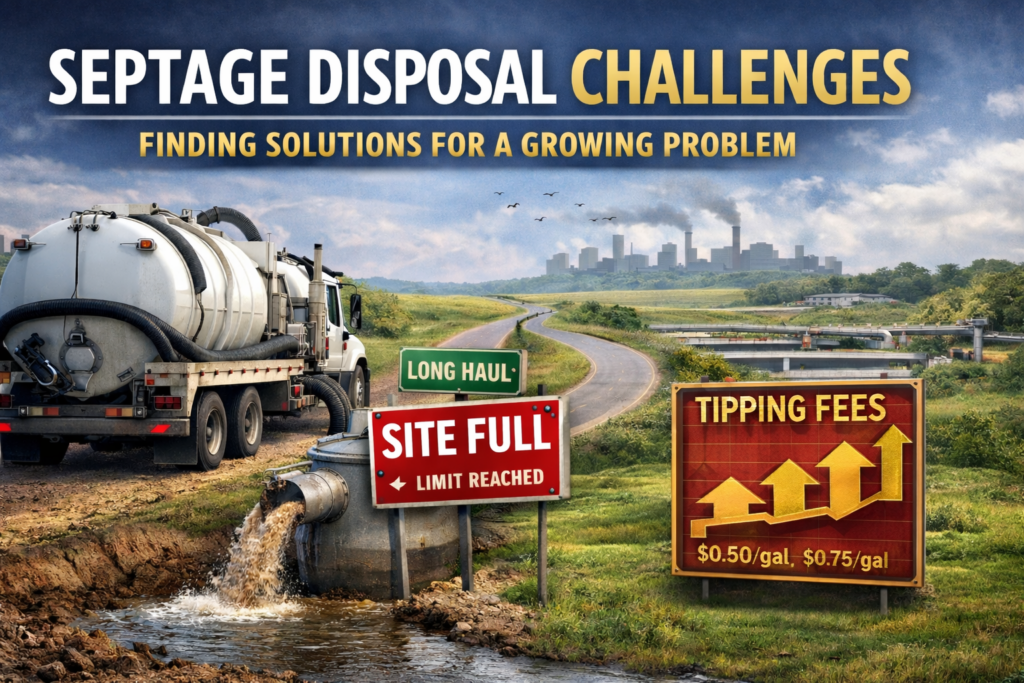
Wastewater pumpers are running into a growing problem: there just aren’t enough places to take septage anymore. As more homes rely on septic systems and existing ones age, the amount of waste that needs to be hauled and treated keeps climbing—but disposal options aren’t keeping up.

That’s forcing pumpers to travel farther, spend more, and deal with tighter restrictions at treatment facilities. In some areas, it’s becoming harder to stay efficient—and even harder to keep up with demand.

The industry is starting to look at solutions like expanding treatment capacity, improving receiving infrastructure,

Read More »
COnstructed halted due to infrastructure capacity
Decentralized Wastewater

When Infrastructure Hits Capacity: The Growing Challenge Stalling Development Across the U.S.

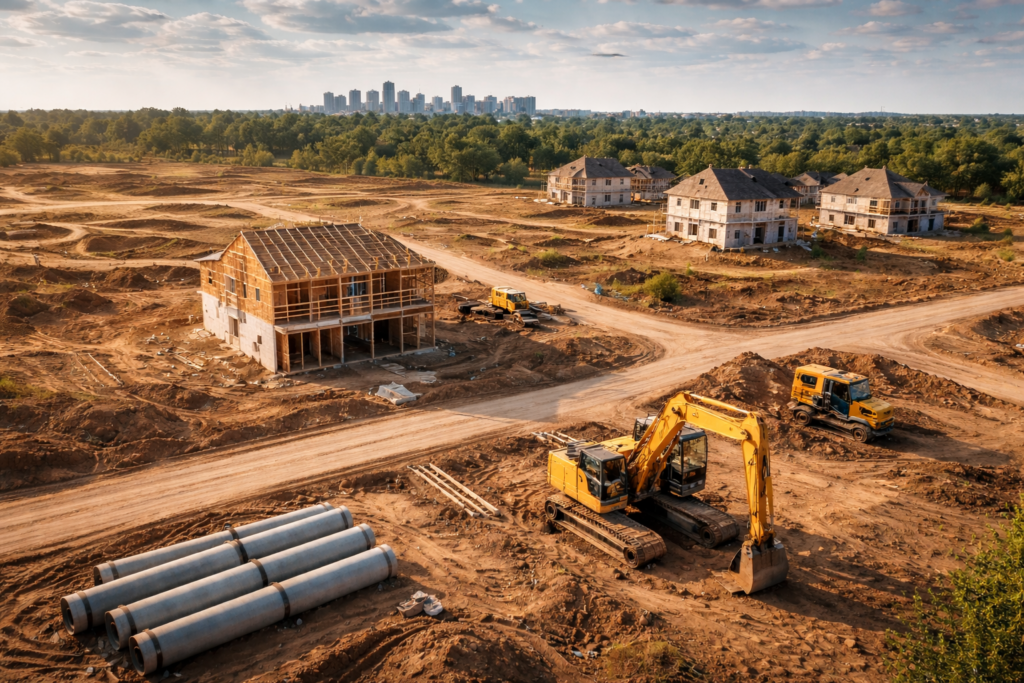
Across the United States, communities are encountering a growing challenge: wastewater infrastructure reaching capacity before development slows down. When sewer systems reach their limits, municipalities often have no choice but to delay or halt new projects until infrastructure upgrades can be completed—a process that can take years.

A recent example in Durham, North Carolina, where sewer capacity constraints have stalled hundreds of housing units, highlights a broader national trend. Similar situations have emerged in states including Maryland and Maine where rapid population growth, aging infrastructure, and long infrastructure upgrade timelines have forced municipalities

Read More »

A next-generation engineering and manufacturing company delivering innovative equipment and infrastructure products for the water, wastewater, and energy storage utility markets.

© 2026 Infrastructure Dynamics. All rights reserved.