
For many years, wastewater planning was often treated as a simple yes-or-no question: does the site have access to sewer?
If the answer was yes, the development path usually appeared clear. A nearby collection line, a utility service area, or an available connection point gave owners and developers confidence that wastewater service could be addressed through the conventional public utility process.
But in more communities, that assumption is no longer enough.
A sewer line may exist nearby. A public utility may technically serve the area. The project may even be located inside a planned service boundary. Yet development can still stall because the downstream collection system is overloaded, the pump station lacks capacity, the treatment facility is approaching its permitted limits, or the required utility expansion is years away.
The scale of the challenge is significant: EPA’s Clean Watersheds Needs Survey estimates $630.1 billion in U.S. clean water infrastructure needs over the next 20 years, including major needs for conveyance systems, water reuse, and decentralized wastewater treatment. US EPA
In other words, the issue is not always whether sewer exists. Increasingly, the issue is whether the system has enough available capacity to support growth.
That distinction is changing how developers, engineers, municipalities, and private utility partners think about wastewater infrastructure.
The Capacity Gap Between Development and Utility Expansion
Across the country, development demand is moving faster than infrastructure expansion. Housing, commercial properties, hospitality projects, campgrounds, industrial facilities, and mixed-use developments often need wastewater service on a project timeline. Public infrastructure, however, typically moves on a capital planning timeline.
Those two schedules do not always align.
A project may be ready to move forward, but the local utility may need years to design, fund, permit, and construct downstream improvements. In the meantime, the development may be delayed, reduced in scope, or placed on hold entirely. Even when a municipality supports growth, it may not have the immediate infrastructure capacity to absorb new flow without risking compliance issues, service interruptions, or strain on existing customers.
This is where many projects encounter a difficult middle ground.
They are not completely unserved. They are not necessarily remote. They may not fit the traditional image of a rural or off-grid wastewater problem. Instead, they are located in areas where infrastructure is present but constrained.
That is the exact environment where hybrid wastewater infrastructure becomes increasingly important.
The Infrastructure Need Is National, Not Isolated
This capacity challenge is not limited to one region or one type of project. The U.S. Environmental Protection Agency’s Clean Watersheds Needs Survey estimates $630.1 billion in clean water infrastructure needs over the next 20 years, including wastewater treatment, conveyance systems, stormwater, water reuse, and decentralized wastewater treatment systems. The same EPA data identifies $151.1 billion in conveyance system repair and new conveyance needs and $74.7 billion in decentralized wastewater treatment system needs. US EPA
Those numbers help explain why many communities are facing a practical gap between development demand and utility capacity. Even where sewer infrastructure exists, collection lines, pump stations, force mains, and treatment facilities may require major investment before they can reliably support new growth.
What Is Hybrid Wastewater Infrastructure?
Hybrid wastewater infrastructure combines centralized utility service with decentralized or project-specific wastewater solutions. Rather than viewing public sewer and decentralized treatment as opposing approaches, a hybrid model uses both where they make the most sense.
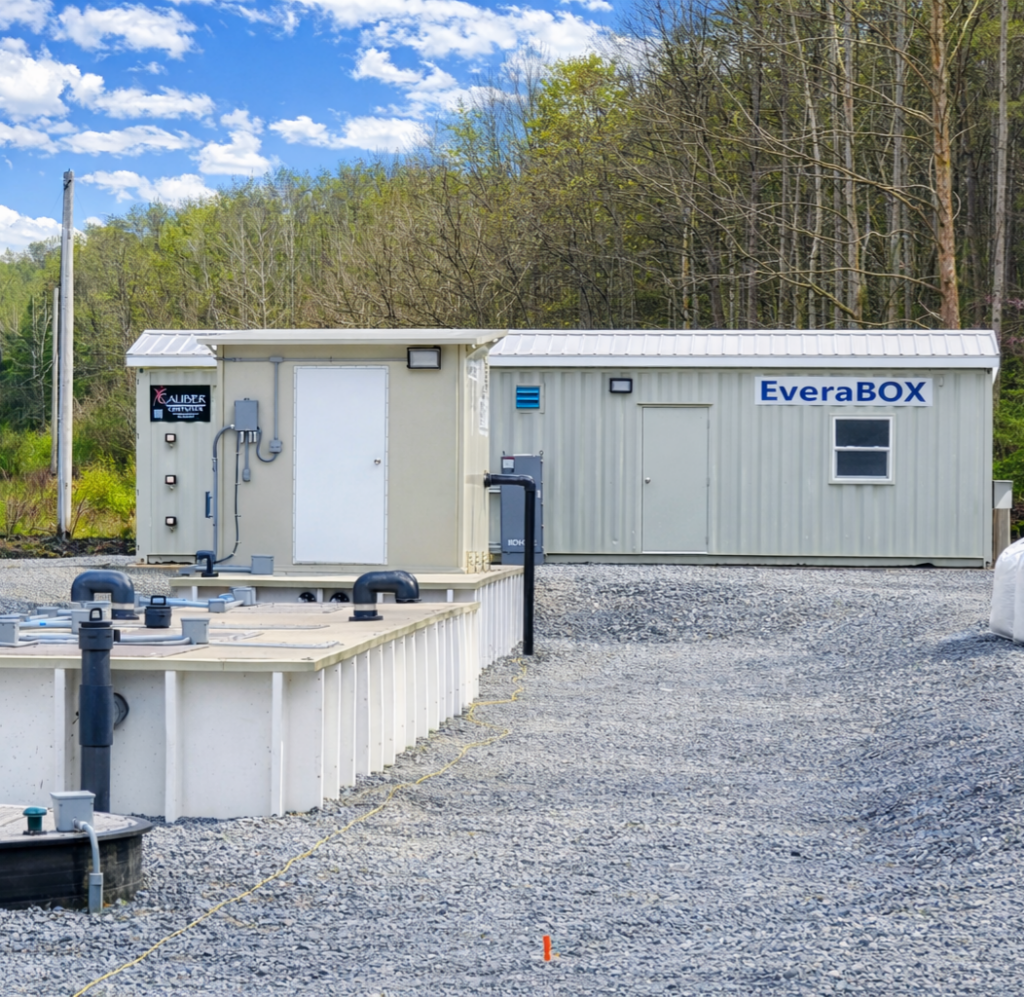
In practice, that may mean using an onsite treatment system to serve a development until a public sewer extension is available. It may mean treating wastewater locally to reduce the burden on a constrained downstream system. It may mean pairing public water service with decentralized wastewater treatment. It may also mean using advanced treatment and reuse strategies to reduce discharge volumes or support non-potable reuse applications.
The point is not to replace centralized utilities in every situation. Centralized sewer systems remain essential infrastructure. The point is to recognize that centralized systems are not always available, expandable, or ready at the moment development needs them.
Hybrid infrastructure creates another path forward.
Why Decentralized and Onsite Systems Are Becoming Part of the Mainstream Conversation
Decentralized wastewater treatment is increasingly recognized as part of the broader clean water infrastructure toolkit. EPA identifies decentralized wastewater systems as one of the categories included in national clean water infrastructure needs planning, alongside publicly owned treatment works, stormwater, and nonpoint source control. US EPA
That matters because decentralized systems are no longer only relevant to remote or rural sites. They can also support projects in developed areas where legacy infrastructure is constrained, unavailable, or not expandable on the project’s timeline.
Why the Old Binary Model Is Breaking Down
Historically, many wastewater decisions were framed around two categories: centralized sewer or onsite septic. That framework worked when development patterns were simpler, utility systems had more available capacity, and regulatory expectations were less complex.
Today, the market is more complicated.
Developers may be working on sites where conventional septic is not appropriate, public sewer is not close enough, or the local utility cannot accept additional flow. Municipalities may want economic development but lack the capital budget or treatment capacity to support every project immediately. Engineers may be asked to solve wastewater challenges in places where the available options do not fit neatly into traditional categories.
At the same time, treatment technologies have advanced. Modular wastewater treatment systems, factory-built pump stations, remote monitoring, advanced controls, and integrated service models now make it possible to deploy reliable infrastructure at smaller scales and in more flexible configurations.
That flexibility is the foundation of the hybrid model.
Common Situations Where Hybrid Infrastructure Can Help
Hybrid wastewater infrastructure can be useful in a wide range of development and utility scenarios.
One common example is a site where public water is available but sanitary sewer is not. This is common in growing corridors, commercial areas, and recreational developments where water service has expanded ahead of wastewater infrastructure. In these cases, a decentralized treatment system may allow the project to move forward without waiting for a full sewer extension.
Another example is a site located near sewer, but where downstream capacity is limited. The collection line may be nearby, but the pump station, force main, or treatment plant may not have the capacity to accept additional flow. A hybrid solution can reduce or manage the impact of that new flow while broader utility improvements are planned.
Hybrid infrastructure can also support phased development. Instead of requiring a large public utility expansion before the first phase of a project can begin, decentralized treatment or modular pumping infrastructure may be scaled with demand. As the project grows, capacity can be expanded, integrated, or transitioned depending on long-term utility plans.
In some cases, hybrid systems can also support water reuse. Treated effluent may be suitable for irrigation, cooling, toilet flushing, process water, or other non-potable applications where allowed by local regulations. This reduces demand on potable water systems and can improve the overall sustainability profile of a project.
The Developer’s Perspective: Time, Certainty, and Risk
For developers, wastewater capacity is not just a technical issue. It is a schedule issue, a financing issue, and a project feasibility issue.
A site may have strong market demand, favorable zoning, available capital, and a clear development plan. But if wastewater service is uncertain, the entire project can be exposed to risk. Delays in utility approvals or infrastructure construction can affect financing, tenant commitments, land carrying costs, and project returns.
Hybrid wastewater infrastructure helps address that uncertainty by creating a practical service pathway when conventional utility service is unavailable, delayed, or capacity-constrained.
This does not eliminate the need for engineering, permitting, or regulatory review. But it does give project teams more options. Instead of waiting for one large public infrastructure solution to unlock a site, developers and municipalities can evaluate whether a smaller, modular, or decentralized system can solve the immediate problem while preserving long-term flexibility.
That flexibility can be especially valuable for projects such as apartment communities, campgrounds, resorts, commercial properties, data centers, industrial sites, and mixed-use developments where timing and certainty are critical.
The Municipality’s Perspective: Growth Without Overloading the System
For municipalities and utility providers, hybrid wastewater infrastructure can also be a tool for managing growth responsibly.
Communities often face pressure to support new development, expand the tax base, and provide housing or commercial opportunities. At the same time, utility operators must protect existing customers, comply with permits, and avoid overloading collection and treatment systems.
When capacity is limited, the default answer is often delay. But delay is not always the best long-term economic or community outcome.
A hybrid approach can help bridge the gap between immediate development demand and long-term utility planning. By using decentralized treatment, modular pumping, flow equalization, or project-specific infrastructure, communities may be able to support growth in a controlled manner without forcing all new demand onto an already constrained system.
In some cases, hybrid systems may serve as interim infrastructure. In others, they may become a permanent part of the local wastewater strategy. The right answer depends on site conditions, regulatory requirements, ownership structure, operational responsibilities, and long-term planning goals.
Hybrid Systems Can Complement, Not Compete With, Public Utilities
A hybrid approach does not have to conflict with municipal utility planning. The US Water Alliance describes onsite water systems as systems that are often integrated into a city’s larger water and wastewater system, helping reduce potable water demand and minimize strain on wastewater systems. US Water Alliance
That framing is important. Hybrid infrastructure is not about replacing public utilities. It is about giving utilities, developers, and municipalities more flexibility when growth, funding, permitting, and infrastructure timelines do not align.
Why Modular Systems Fit the Hybrid Model
Hybrid infrastructure works best when systems can be adapted to site-specific conditions without creating unnecessary construction complexity. That is one reason modular wastewater infrastructure is becoming more relevant.
Factory-built treatment systems and pump stations can reduce onsite construction time, improve quality control, and simplify deployment. They can also be designed around known flow conditions, phased capacity needs, and specific treatment requirements.
Compared with large, field-built infrastructure projects, modular systems can often provide a more practical path for projects that need reliable service but do not require a full-scale municipal expansion on day one.
Modern modular systems may also include integrated controls, remote monitoring, and operational support features. These capabilities are important because smaller decentralized systems still require professional oversight, maintenance, and compliance management. Infrastructure is only useful if it performs reliably over time.
Ownership and Operation Matter
A major question in any hybrid wastewater project is not only what gets built, but who owns it, who operates it, and who is responsible for long-term performance.
Traditional equipment procurement places much of that burden on the owner. The developer or facility owner must hire engineers, purchase equipment, navigate permitting, find licensed operators, manage compliance, and maintain the system over its useful life.
That structure may work for some owners. But for others, the operational burden is a major barrier.
This is one reason service-based infrastructure models are gaining attention. Under a managed service structure, the provider may design, deliver, operate, maintain, and monitor the system while the customer pays a predictable service fee. This model can reduce the owner’s capital burden and shift responsibility for long-term system performance to a specialized infrastructure partner.
For projects where wastewater is essential but not the owner’s core business, that shift can be significant.
Hybrid Infrastructure Is Not a Shortcut
It is important to be clear about what hybrid wastewater infrastructure is — and what it is not.
It is not a way to avoid permitting. It is not a substitute for sound engineering. It is not a one-size-fits-all answer. Every project still requires careful evaluation of wastewater flows, treatment requirements, discharge options, site constraints, regulatory pathways, ownership structure, and long-term operations.
But hybrid infrastructure is a way to expand the solution set.
Instead of forcing every project into a binary choice between full public sewer availability and conventional onsite systems, hybrid planning allows project teams to ask better questions:
Can wastewater be treated closer to the point of generation?
Can capacity be added in phases?
Can treated effluent be reused?
Can a decentralized system reduce strain on the public utility?
Can an interim solution support development until a larger utility expansion is complete?
Can ownership and operations be structured so the system remains professionally managed over time?
Those questions are becoming more important as development pressure increases and traditional infrastructure timelines stretch longer.
Reuse Can Reduce Both Water Demand and Sewer Loading
Onsite non-potable reuse is another reason hybrid infrastructure is gaining attention. EPA defines onsite non-potable reuse as collecting water from onsite sources, treating it appropriately, and using it for applications such as toilet flushing, fire protection, vehicle washing, street cleaning, commercial laundries, and other non-potable uses. EPA also notes that these systems can help reduce freshwater demand and reduce the volume of water entering a sewer system. US EPA
The WateReuse Association makes a similar point, noting that onsite reuse can help serve customers who are difficult to reach with centralized systems and can support infill development where legacy infrastructure is already at full capacity. Water Reuse Association
A More Flexible Future for Wastewater Planning
The future of wastewater infrastructure will not be defined by a simple choice between centralized and decentralized systems. In many places, the more practical answer will be a combination of both.
Centralized utilities will continue to serve as the backbone of wastewater management in cities, towns, and developed corridors. But decentralized and modular systems will play an increasing role in extending capacity, supporting growth, enabling reuse, and solving site-specific constraints.
That is the value of hybrid wastewater infrastructure.
It gives developers a path forward when sewer capacity is uncertain. It gives municipalities another tool for managing growth. It gives engineers more flexibility in matching infrastructure to real-world site conditions. And it gives communities a way to support development without waiting years for every centralized improvement to be completed first.
When sewer exists but capacity does not, the question should not be whether the project must stop.
The better question is whether a hybrid wastewater solution can keep it moving responsibly.
