
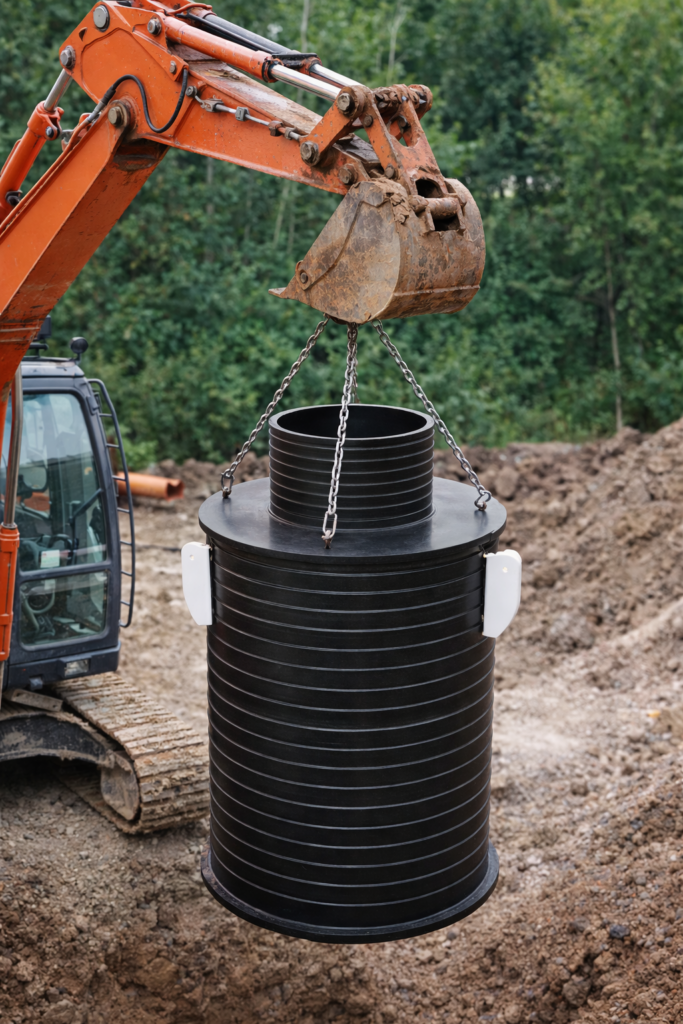
Across the United States, wastewater infrastructure is quietly approaching a critical inflection point.
Municipal sewer systems built decades ago are reaching the end of their service life. Beneath streets and communities nationwide lies a vast network of pipes and manholes that were largely installed during the infrastructure boom of the mid-20th century. Many of these systems were designed with expected lifespans of only a few decades.
Today, the consequences of that aging infrastructure are becoming increasingly difficult to ignore.
The Scale of the Challenge
The United States currently operates an enormous wastewater collection network.
- Over 800,000 miles of public sewer pipes
- More than 500,000 miles of private lateral sewer lines
- More than 20 million sanitary sewer manholes nationwide
Of these structures, more than 4 million manholes are estimated to be between 30 and 50 years old—well beyond their intended service life.
The Environmental Protection Agency estimates that $630 billion in investment will be required over the next 20 years to repair, replace, and upgrade wastewater infrastructure across the country.
But replacing aging infrastructure is not just about cost. It is also about addressing the underlying causes of failure.
The Hidden Enemy: Microbial Induced Corrosion
One of the most destructive forces inside wastewater systems is something most people have never heard of: microbial induced corrosion (MIC).
Inside gravity sewer systems, organic material decomposes under anaerobic (oxygen-free) conditions. This process produces hydrogen sulfide gas (H₂S).
When hydrogen sulfide gas rises into the airspace of sewer pipes and manholes, it reacts with moisture to form sulfuric acid.
Sulfuric acid aggressively attacks cement-based materials.
Over time, this process:
- Dissolves concrete surfaces
- Exposes reinforcing steel
- Causes structural deterioration
- Leads to leaks, infiltration, and system failures
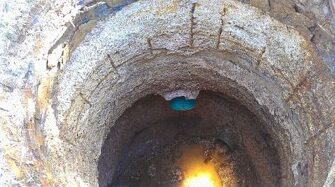
The problem is widespread—and fundamentally unavoidable. As long as wastewater systems carry organic material, hydrogen sulfide generation will occur.
This means that concrete infrastructure is constantly under chemical attack from the moment it enters service.
The Limits of Traditional Solutions
The industry has attempted several strategies to slow this degradation.
Epoxy and Spray-On Liners
Some utilities install protective coatings inside concrete manholes. These coatings can delay corrosion, but they introduce new complications:
- High installation cost
- Confined-space entry requirements
- Long-term adhesion failures
- Difficult maintenance
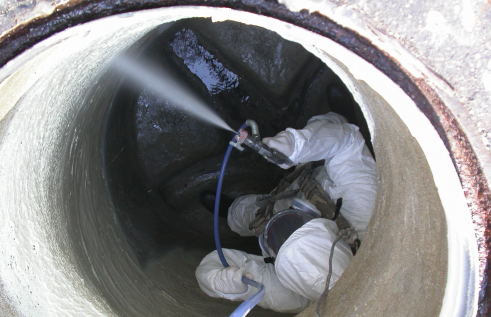
If water infiltrates behind the liner, corrosion can still occur beneath the protective layer.
Embedded PVC Liners
Another approach embeds PVC liners inside concrete structures. While this improves chemical resistance, installation remains complex and labor-intensive.
Field welding inside confined spaces is required, and long-term reliability still depends on bonding between different materials.
Polymeric Concrete Structures
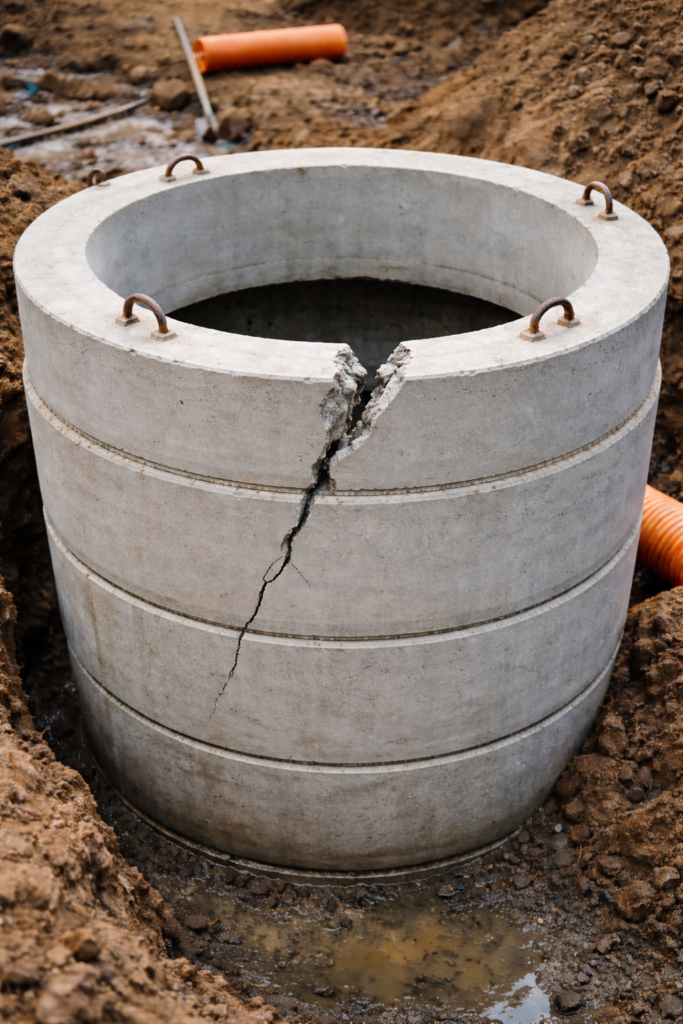
Polymeric concrete uses resin instead of cement to bind aggregate, improving chemical resistance. However, these structures introduce other challenges:
- Extremely high material costs
- Heavy weight
- Brittleness and crack susceptibility
- Transportation and installation risks
In some cases, polymeric concrete structures can crack during shipping or installation, rendering them unusable.
These limitations highlight an important truth:
Most traditional solutions attempt to protect concrete rather than eliminate the root problem.
A Different Approach: Structural Thermoplastics
Instead of trying to protect concrete from corrosion, a new generation of infrastructure systems focuses on materials that are inherently resistant to the sewer environment.
High-density polyethylene (HDPE) offers several key advantages in wastewater applications:
- Complete resistance to sulfuric acid corrosion
- High ductility and impact resistance
- Tolerance for soil settlement and shifting
- Leak-free welded construction
These properties make HDPE well suited for underground infrastructure exposed to aggressive chemical conditions.
Introducing the MagnaPlast Manhole System
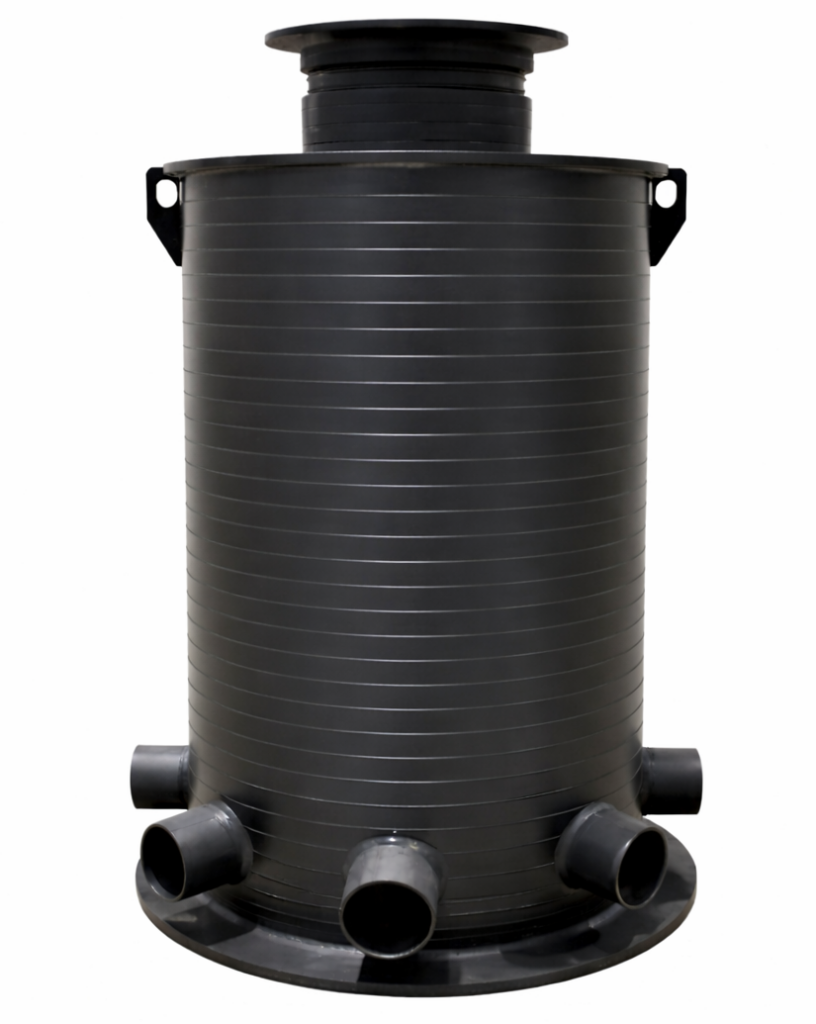
The MagnaPlast sanitary sewer manhole was developed to address the limitations of traditional concrete structures.
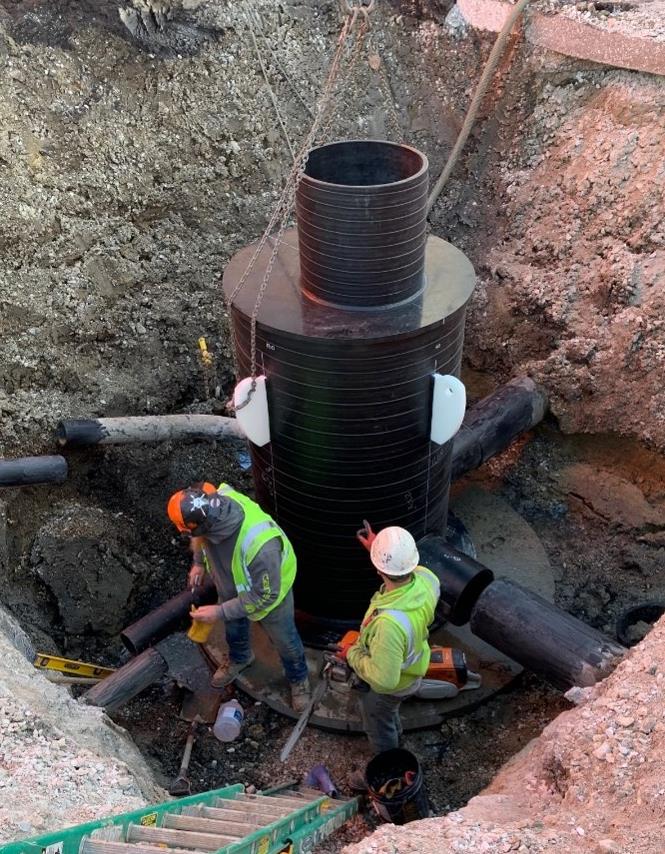
Rather than assembling multiple concrete sections in the field, MagnaPlast uses a factory-fabricated monolithic HDPE structure.
Key features include:
Monolithic Construction
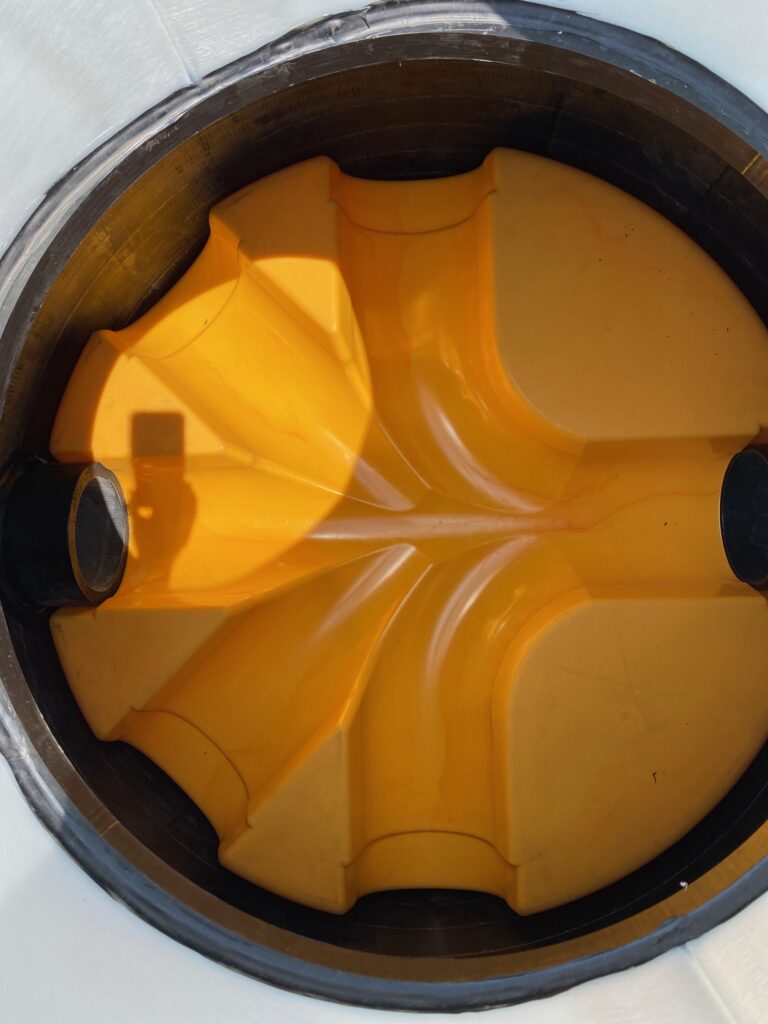
The manhole is manufactured as a single integrated structure with no structural joints, eliminating common leakage points.
Corrosion Resistance
Because the structure is made entirely from HDPE, it is impervious to sulfuric acid and hydrogen sulfide exposure.
Faster Installation
Lightweight construction allows multiple manholes to be delivered on a single truck and installed more rapidly than traditional concrete systems.
Reduced Lifecycle Risk
Without corrosion-driven deterioration, HDPE manholes are designed for service lives exceeding 100 years.
Lower Maintenance Burden
Leak-free construction reduces infiltration and inflow, improving system efficiency and reducing treatment costs.
A Massive Market Opportunity
The need for sewer infrastructure replacement represents one of the largest civil engineering opportunities of the coming decades.
With millions of aging manholes nearing failure, utilities face a critical question:
Should replacement systems use the same materials that caused the original failures?
Or is it time to adopt infrastructure materials engineered for the realities of modern wastewater systems?
Structural thermoplastics may offer a compelling answer.
The Next Generation of Sewer Infrastructure
Concrete dominated wastewater infrastructure construction for more than half a century. It was the material that defined an era of rapid infrastructure expansion.
But as utilities confront aging systems, corrosion challenges, and mounting maintenance costs, the industry is beginning to rethink its approach.
HDPE and other advanced thermoplastics are now being used to build:
- Pump stations
- Treatment systems
- Storage tanks
- Sewer manholes
These materials bring a fundamentally different philosophy to infrastructure design—one focused on longevity, chemical resistance, and lifecycle performance.
The transition will not happen overnight.
But as utilities look toward the next century of infrastructure investment, structural thermoplastics are increasingly positioned to play a leading role.
Concrete may have built the last generation of sewer systems.
Advanced thermoplastics may build the next one.
