
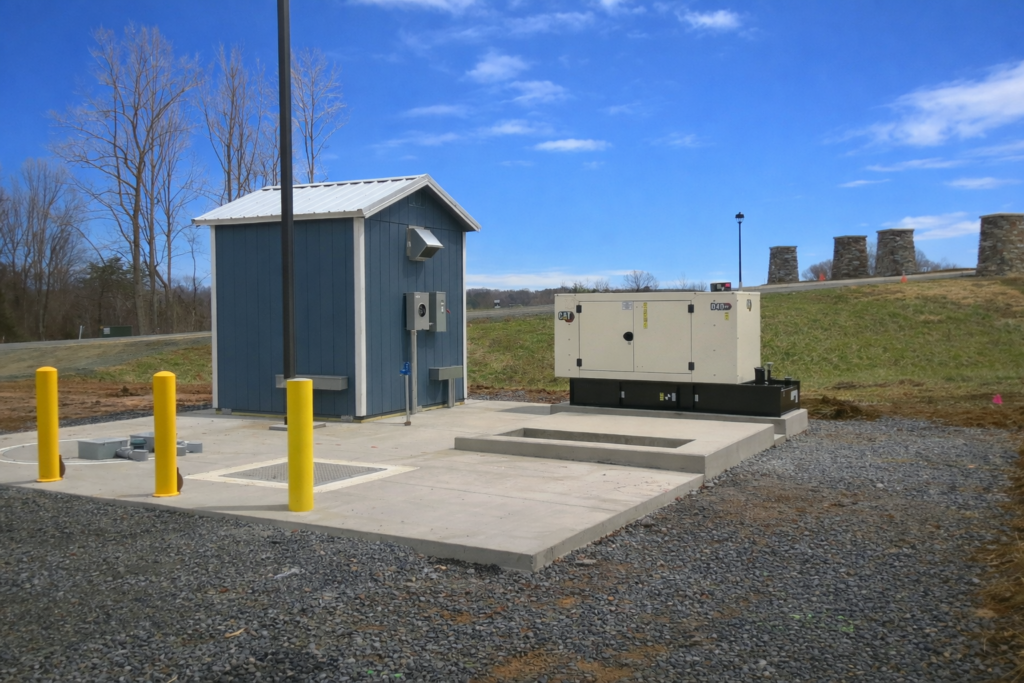
When wastewater infrastructure is working well, most people never think about it. That is the point. A well-designed pump station, treatment system, or collection component should quietly support a site, community, business, or development for years without becoming the center of attention.
But for engineers, developers, utilities, contractors, and owners, the decisions made early in a project can determine whether that infrastructure remains quiet — or becomes a recurring source of service calls, maintenance headaches, odor concerns, downtime, and unexpected cost.
That is why wastewater infrastructure should not be viewed as a collection of isolated products. It should be evaluated as a long-term risk management decision.
The real cost is rarely just the installed cost
In the early stages of a project, it is natural for conversations to focus on equipment pricing, lead times, footprint, and installation requirements. Those details matter. But they are only part of the picture.
The more important question is: what happens after startup?
A wastewater system lives in a demanding environment. It has to manage changing flows, variable loading, corrosive conditions, operator access requirements, site constraints, and the reality that no two projects are exactly alike. A lower-cost decision at the front end can become expensive if it increases maintenance frequency, complicates service access, shortens component life, or limits flexibility when site conditions change.
This is consistent with the way the U.S. Environmental Protection Agency describes infrastructure asset management: managing capital assets to minimize the total cost of owning and operating them while still delivering the desired level of service. In other words, the best infrastructure decisions are not simply purchase decisions. They are lifecycle decisions.
The strongest infrastructure choices are the ones that reduce uncertainty across the full life of the system.
Aging infrastructure makes risk more visible
The broader market context is clear. The American Society of Civil Engineers’ 2025 Report Card for America’s Infrastructure gave U.S. wastewater infrastructure a D+, underscoring that wastewater systems remain under pressure from aging assets, investment gaps, and rising performance expectations.
For municipalities, utilities, and private owners, that pressure shows up in practical ways: systems that are harder to maintain, structures approaching the end of useful life, and capital decisions that must stretch farther than ever. Every replacement, upgrade, or new installation becomes an opportunity to reduce future risk — or unintentionally carry it forward.
That is why INFRASTRUCTURE DYNAMICS focuses on infrastructure that is engineered for durability, serviceability, and long-term value from the beginning.
Durability is not a feature — it is a strategy
Material selection is one of the clearest examples. In wastewater applications, durability is not simply a technical specification. It is a strategy for protecting owners and operators from avoidable problems.
Corrosion resistance, structural integrity, watertight construction, and thoughtful access design all influence how a system performs over time. When these factors are addressed up front, the result is not only a better product — it is a more predictable operating environment.
INFRASTRUCTURE DYNAMICS’ internal technical materials emphasize the same point: Heavy Plastic Manufacturing using Structurally Reinforced Thermoplastics supports corrosion and chemical resistance, modular deployment, precision manufacturing, reduced maintenance, and lower lifecycle cost. That is not just a material story. It is a risk-reduction story.
That predictability matters. It helps owners budget more confidently, helps operators work more safely, and helps engineers recommend solutions that stand up to real-world conditions.
Robust design supports better decisions in the field
No design team can eliminate every variable from a site. Groundwater conditions, utility conflicts, changing flows, installation constraints, and project sequencing can all create pressure on the team.
That is where robust, practical system design becomes valuable.
A well-conceived pump station or treatment system should support the people who have to install, operate, and maintain it. That means clear access, serviceable layouts, durable components, and enough flexibility to account for field realities. The best infrastructure solutions are not just engineered for the drawing set. They are engineered for the jobsite and for the years that follow.
INFRASTRUCTURE DYNAMICS’ pump station materials describe this approach through rapid design analysis, customizable configurations, experienced technical support, reduced technical risk, SRTP durability, long structural lifecycle, and lower total cost of ownership. Those advantages matter because field conditions rarely reward fragile designs.
Decentralized and modular systems are part of the answer
EPA resources note that decentralized wastewater systems can provide an effective, lower-cost alternative where centralized systems are impractical because of distance, terrain, or other local constraints. EPA also notes that decentralized projects may be eligible for Clean Water State Revolving Fund financing when they repair, replace, upgrade, or construct systems that support wastewater management.
That matters for communities and private developments that need capacity, but cannot wait for large centralized infrastructure expansions. Modular and decentralized systems can help align treatment capacity with actual site needs, reduce deployment complexity, and support responsible growth.
For INFRASTRUCTURE DYNAMICS, this is where product design, material selection, and project delivery intersect. A pump station, treatment system, manhole, modular enclosure, or process tank should not be treated as an isolated purchase. It should be part of a broader infrastructure strategy.
The right partner matters as much as the right product
Wastewater projects often require coordination among engineers, owners, contractors, representatives, distributors, regulators, and operators. Product performance matters, but so does the quality of support around the product.
A strong infrastructure partner should help clarify options, support technical review, provide useful documentation, train sales and field partners, and stay engaged after the initial inquiry. That support can make the difference between simply supplying equipment and helping a project move forward with confidence.
For owners and engineers, the question should not only be, “Does this product meet the specification?” It should also be, “Will this team help us reduce risk from design through operation?”
INFRASTRUCTURE DYNAMICS’ internal Statement of Qualifications describes the company’s role across custom equipment design, technical consultation, permitting assistance, engineering design packages, design-build services, and vendor-supplied engineering support. That breadth matters because infrastructure risk does not sit in one phase of a project. It moves from concept to procurement, from installation to startup, and from operation to replacement planning.
Infrastructure that stays out of the spotlight
The goal of wastewater infrastructure is not to draw attention to itself. The goal is reliable, durable, serviceable performance that allows communities, businesses, and developments to operate without interruption.
That kind of performance starts with better questions:
- What risks are we trying to reduce over the life of the system?
- How will this design perform under real operating conditions?
- What will maintenance look like five or ten years from now?
- Does this solution support the installer, operator, engineer, and owner?
- Is the product backed by a team that understands the application?
When those questions guide the decision-making process, wastewater infrastructure becomes more than equipment in the ground. It becomes a long-term asset.
At INFRASTRUCTURE DYNAMICS, we believe sustainable utilities are built through practical engineering, durable materials, responsive support, and a clear understanding of how infrastructure performs after installation. That is the real infrastructure system advantage: solutions designed not just to be installed, but to keep working.
References and further reading
External references
- EPA: About Asset Management — asset management as a framework for minimizing total ownership and operating cost while maintaining desired service levels.
- ASCE: 2025 Report Card for America’s Infrastructure — national infrastructure context, including the wastewater sector grade.
- EPA: About Small Wastewater Systems — overview of centralized and decentralized wastewater systems and challenges facing small communities.
- EPA: CWSRF Decentralized Wastewater Treatment — funding context for decentralized wastewater repair, replacement, upgrades, and construction.
- EPA: Clean Water Technology Center — resources supporting innovative and alternative wastewater technologies.
