
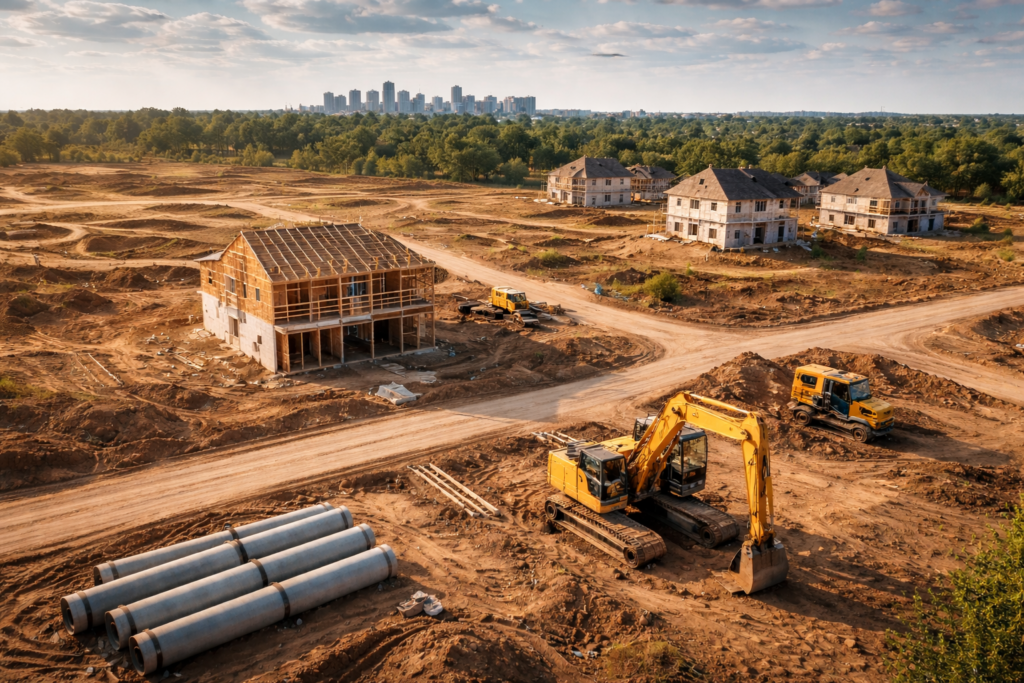
Across the United States, a growing number of development projects are facing an unexpected obstacle: infrastructure capacity.
In many communities, aging wastewater systems are struggling to keep up with rapid growth. When those systems reach their limits, cities are often forced to halt or delay new development until upgrades can be completed. For developers and municipalities alike, these situations create uncertainty, delay housing delivery, and stall economic growth.
A recent example in Durham, North Carolina illustrates the challenge.
The Durham Sewer Capacity Issue
In early 2026, city officials announced that a portion of the sewer system serving East Durham had reached full capacity. As a result, development in the affected area was effectively paused. Approximately 700 housing units are now stalled, and infrastructure upgrades are not expected to be completed until 2029 or 2030.
For developers who have already invested significant resources into land acquisition, planning, and approvals, delays of several years can dramatically impact project feasibility.
The situation also highlights a broader issue: infrastructure constraints are often discovered late in the development process, sometimes after projects are already underway.
Durham is not alone.
A National Pattern of Sewer Capacity Constraints
Across the country, municipalities are confronting similar challenges as population growth and development outpace legacy infrastructure systems.
Recent examples include:
Anne Arundel County, Maryland
Officials recently enacted a moratorium on new development in some areas after the sewer system reached peak capacity, halting approvals for additional connections until system improvements can be completed.
Yarmouth, Maine
A pump station operating near its limits prompted the town council to impose a six-month moratorium on development in part of the community to stabilize the wastewater system and prevent overflows.
In each case, the underlying issue is similar: growth has outpaced the infrastructure originally designed to support it.
Why Sewer Capacity Issues Are Increasing
Several factors are contributing to this growing challenge.
1. Rapid Population Growth
Many cities—especially in the Southeast and Sun Belt—are experiencing population increases that exceed earlier infrastructure planning assumptions.
2. Aging Infrastructure
Wastewater systems built decades ago were designed for smaller populations and lower peak flows. As communities grow, these systems often require major upgrades to maintain compliance with environmental regulations.
3. Inflow and Infiltration
Stormwater infiltration into aging sewer systems can dramatically increase peak flow volumes, pushing systems to capacity even when average daily flows remain within limits.
4. Long Infrastructure Timelines
Major sewer expansions or treatment plant upgrades can take five to ten years from planning to completion due to design, funding, permitting, and construction requirements.
When capacity is reached unexpectedly, municipalities may have little choice but to slow or pause development until upgrades are completed.
The Development Impact
For developers, sewer capacity constraints can have significant consequences:
- Projects delayed for multiple years
- Increased holding costs for land and capital
- Uncertainty in entitlement and permitting timelines
- Reduced housing supply in high-demand markets
For communities, the impact can be equally significant. When infrastructure constraints stall projects, the result can be slower housing production, reduced tax revenue growth, and missed economic opportunities.
Bridging the Infrastructure Gap
While long-term infrastructure upgrades are essential, cities and developers increasingly need short-term solutions that allow projects to move forward while permanent capacity expansions are planned and constructed.
In many cases, interim approaches can include:
- Phased development tied to available infrastructure capacity
- Flow equalization strategies
- Targeted sewer system improvements
- Modular or decentralized wastewater treatment solutions
These approaches can provide temporary or scalable capacity, allowing development to proceed without overwhelming existing municipal systems.
Planning for the Next Phase of Growth
The Durham situation and similar cases across the country highlight an important lesson for communities experiencing rapid growth:
Infrastructure planning must evolve alongside development planning.
Proactive infrastructure analysis, earlier coordination between municipalities and developers, and flexible treatment solutions can help prevent situations where projects are halted after significant investment has already occurred.
As population growth continues across the United States, wastewater infrastructure will increasingly become a critical factor shaping where and how communities expand.
The communities that plan for these challenges early will be better positioned to support sustainable growth in the decades ahead.
