
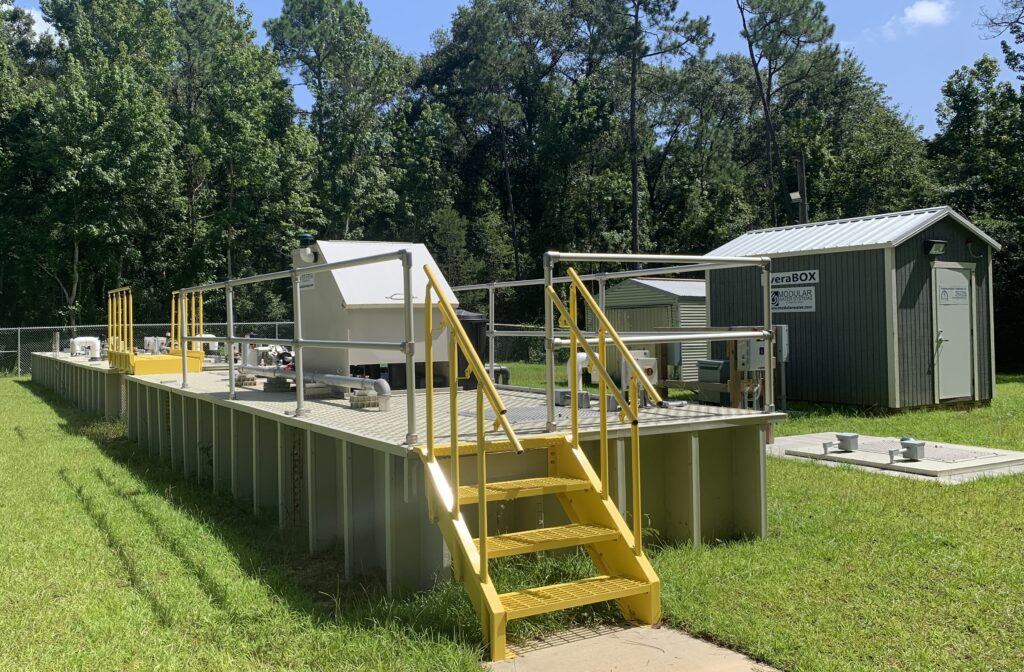
In our previous article, we examined why wastewater failures are often attributed to “aging infrastructure” when the underlying cause is predictable material degradation — particularly biogenic sulfuric acid attack and reinforcement corrosion in traditional systems.
The next question is critical:
If the failure mechanisms are well understood, why are we still building critical infrastructure from materials that are chemically vulnerable in aggressive wastewater environments?
The answer lies in legacy design conventions — and in how materials have historically been selected.
The Traditional Model: Build, Then Protect
For decades, wastewater infrastructure has relied on:
- Reinforced concrete
- Carbon steel or coated steel
- Mortar-lined systems
- Protective liners and coatings
These materials are structurally capable and widely specified.
But in wastewater environments, they are also inherently reactive — which is why they require:
- Coatings
- Liners
- Cathodic protection
- Inspection and rehabilitation cycles
This approach assumes degradation is inevitable and must be managed.
It is a reactive model by design.
Lifecycle Cost vs. Capital Cost
Most infrastructure procurement still prioritizes:
- Initial cost
- Familiarity
- Installation schedule
Yet industry guidance increasingly emphasizes that asset decisions should be evaluated across full lifecycle performance, not simply upfront expenditure.
The U.S. Environmental Protection Agency’s asset management frameworks explicitly stress the importance of lifecycle cost analysis and long-term condition planning in municipal water and wastewater systems. The goal is not just affordability at construction — but sustainability over decades of service (U.S. EPA, Asset Management Best Practices).
Similarly, the American Society of Civil Engineers has repeatedly highlighted in infrastructure resilience guidance that deferred maintenance and under-specification often create long-term fiscal and performance risk for public utilities (ASCE, Infrastructure Resilience & Sustainability Guidance).
In that context, the lowest initial cost can become the highest long-term liability.
Emergency rehabilitation, structural repair, corrosion mitigation programs, and operational disruption frequently outweigh early savings achieved during construction.
Designing Out Corrosion Instead of Managing It
Corrosion control programs attempt to interrupt known degradation pathways.
Material strategy eliminates susceptibility.
Instead of asking:
- “How do we protect concrete from sulfuric acid?”
A more strategic question emerges:
- “Why use materials that react with sulfuric acid at all?”
This reframing shifts corrosion from a maintenance planning issue to a design decision.
What Changes When Materials Are Inherently Resistant?
Engineered copolymer polypropylene and HDPE systems behave fundamentally differently from cementitious and ferrous materials in wastewater environments.
They:
- Do not oxidize
- Do not chemically react with sulfuric acid
- Do not rely on reinforcement that can corrode
- Do not require surface-applied protection to maintain structural integrity
- Maintain performance in continuous moisture environments
When resistance is inherent rather than applied, the infrastructure system becomes simpler:
- Fewer failure interfaces
- No delamination risk
- Reduced crack propagation driven by reinforcement expansion
- More predictable long-term performance
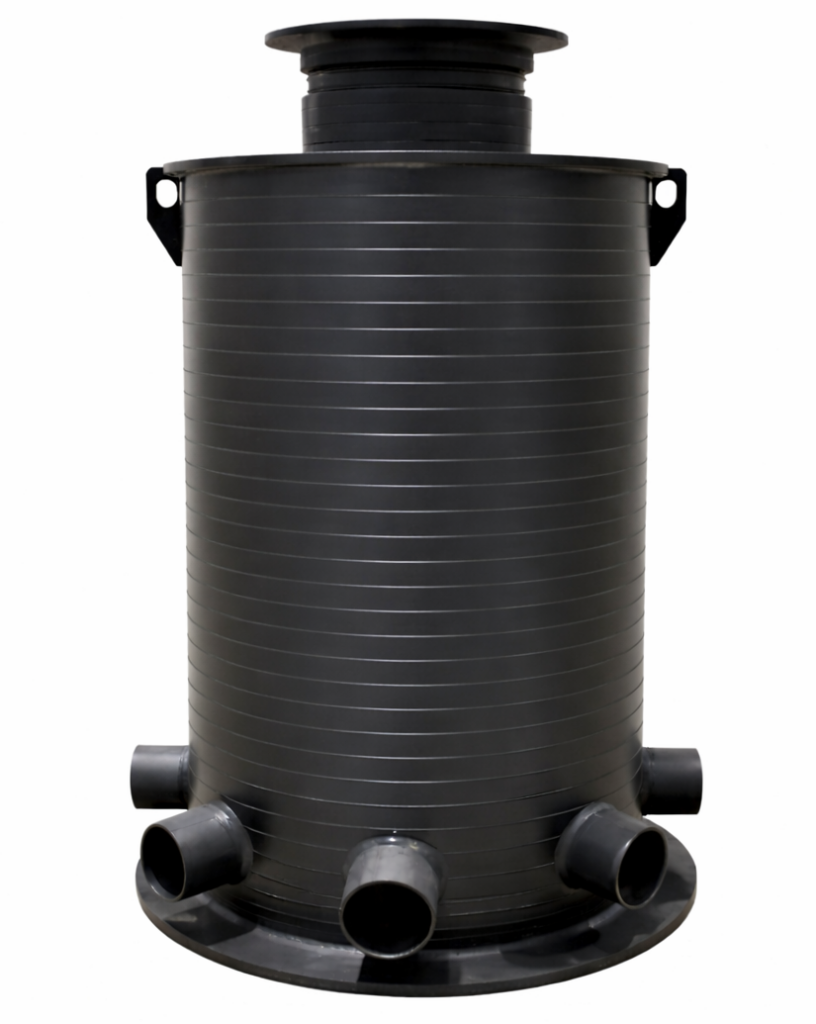
Image (right): MagnaPLAST HDPE Sanitary Sewer Manhole
This is not incremental improvement. It is a shift in structural risk profile.
Climate Variability Raises the Stakes
Wastewater systems today operate under greater environmental variability:
- Higher temperatures accelerate biological activity
- Intense rainfall events alter hydraulic loading
- Extended drought increases concentration of aggressive constituents
- Power disruptions increase anaerobic conditions
ASCE resilience guidance notes that infrastructure planning must now assume variability and stress, not stability. Materials selected today must tolerate fluctuating environmental conditions over extended design horizons.
Infrastructure designed around vulnerable substrates may struggle under that variability. Infrastructure built from inherently resistant materials maintains greater performance stability.
From Reactive Maintenance to Predictable Performance
When materials are inherently resistant to corrosion and chemical degradation:
- Emergency repair frequency declines
- Inspection-driven rehabilitation cycles reduce
- Asset life modeling improves
- Regulatory risk exposure decreases
- Capital planning becomes more stable
Instead of planning around inevitable deterioration, utilities can plan around operational optimization.
That distinction transforms infrastructure strategy.
