
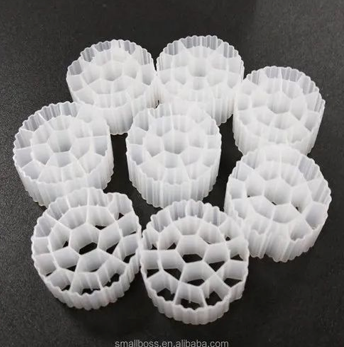
As nutrient limits tighten and plant footprints remain constrained, many wastewater utilities are looking beyond conventional activated sludge toward hybrid treatment systems. Among these, Integrated Fixed-Film Activated Sludge (IFAS) stands out for its ability to deliver higher performance without requiring larger basins.
What Is Conventional Activated Sludge?
Activated Sludge (AS) is the longstanding backbone of secondary wastewater treatment. In this system:
- Microorganisms in suspended growth biologically consume organic matter
- Oxygen is supplied via aeration
- Clarification separates solids before discharge
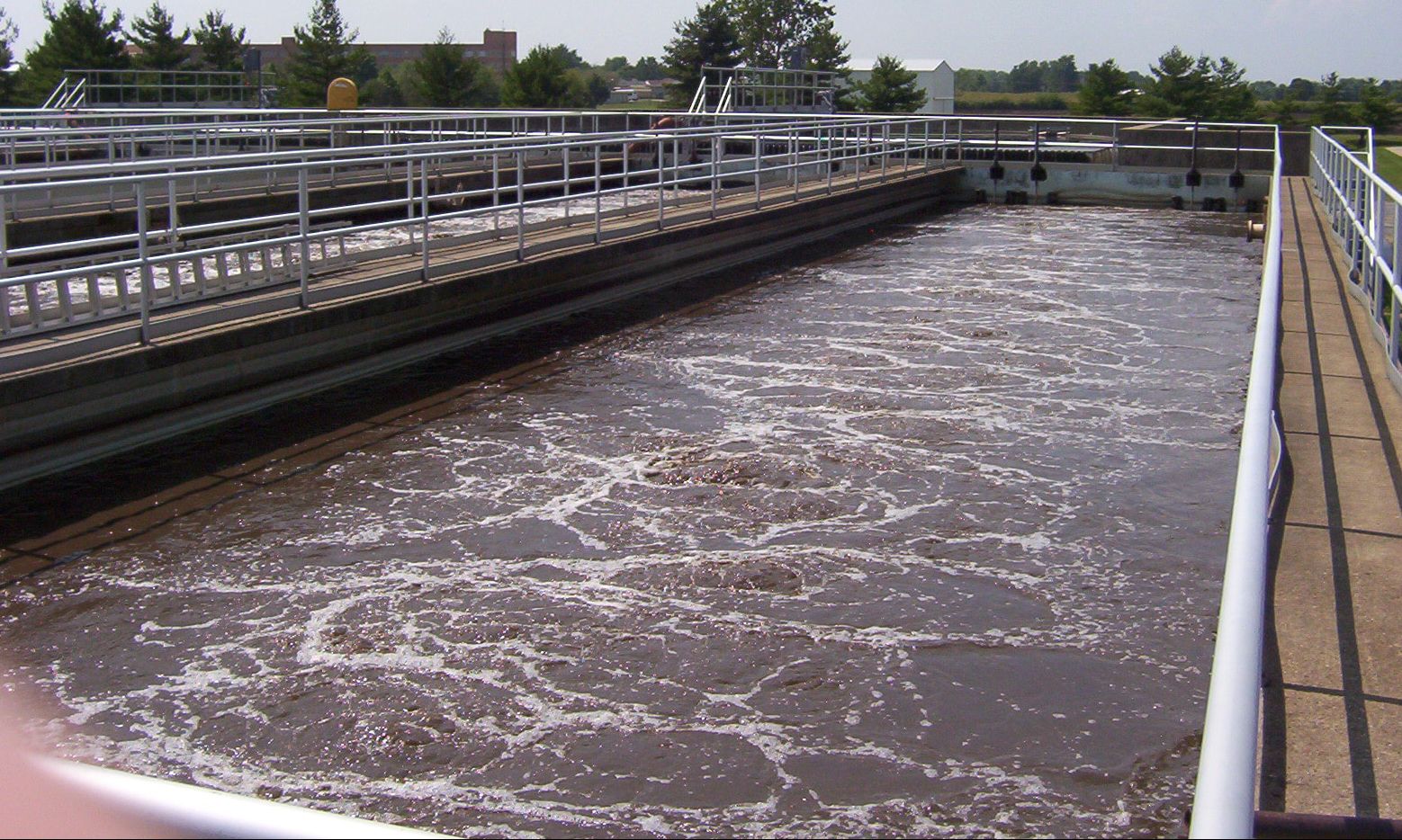
While proven and familiar, conventional AS has limitations:
- Higher sludge yield requiring handling and disposal
- Requires high aeration energy
- Sensitive to shock loads and flow variability
- Larger basin and clarifier footprint
Introducing IFAS — The Best of Both Worlds
IFAS systems combine suspended growth (like AS) with attached growth on specialized media. Plastic carrier media provide surface area for biofilm growth, enabling a higher concentration of biomass within the same reactor volume.
This hybrid configuration delivers multiple advantages:
- Simplified retrofits into existing plants
- Higher treatment capacity in existing footprint
- More stable nitrification
- Improved resilience to load swings
- Lower sludge production
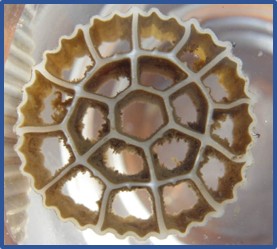
By blending suspended and attached growth, IFAS lets utilities get more performance without more tanks.
How IFAS Improves Performance
Enhanced Nitrification Stability
Nitrifying bacteria grow slowly and can wash out in traditional AS unless solids retention time (SRT) is carefully managed. IFAS provides a habitat for these organisms to thrive, even at lower SRT, making nitrification more stable — particularly during cold weather or shock loads.
Greater Biomass Within Smaller Footprints
Because IFAS supports biomass on media surfaces, process capacity increases without expanding basin volume. This is ideal for plants constrained by land, budget, or permitting.
Reduced Sludge Yield
Hybrid systems often produce less excess sludge than pure suspended growth systems — translating directly to lower hauling and disposal costs.
IFAS vs. Traditional AS: Side-by-Side
| Feature | Conventional AS | IFAS |
|---|---|---|
| Biomass Growth | Suspended only | Suspended + Attached |
| Treatment Capacity | Limited by MLSS | Increased with media |
| Nitrification | SRT-dependent | Supported by biofilm |
| Footprint | Larger | More compact |
| Sludge Production | Higher | Lower |
| Retrofit Flexibility | Moderate | High |
IFAS in Modular Packaged Systems
For municipalities and facilities seeking packaged treatment, IFAS delivers clear advantages:
- Smaller tanks with higher capacity
- Easier field installation
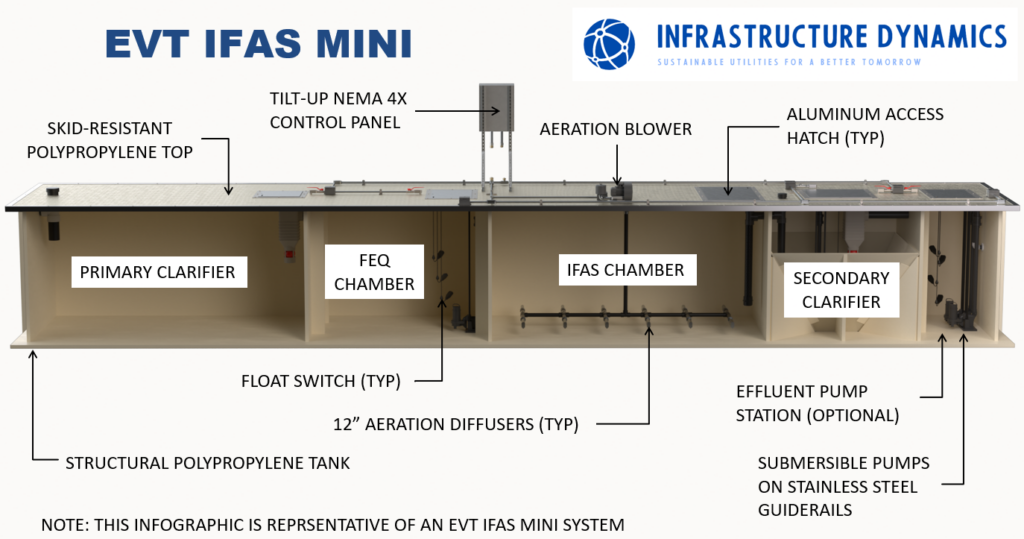
- Corrosion-resistant materials
- Integrated clarification and process controls
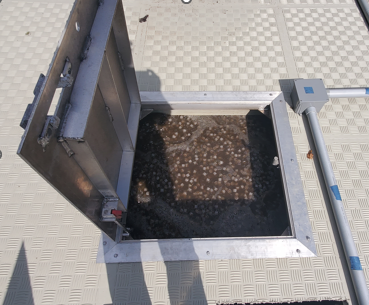
Infrastructure Dynamics’ EveraTREAT IFAS platforms bring these benefits together — combining modular design with advanced biological process engineering that meets stringent nutrient limits without sacrificing simplicity.
When to Choose IFAS vs. Traditional AS
Choose conventional AS when:
- Simple BOD and TSS removal suffices
- Loads are highly predictable
- Operators are comfortable with traditional controls
Choose IFAS when:
- Nutrient limits (nitrogen, phosphorus) are stringent
- Plant footprint is constrained
- Flow and load are variable
- Retrofitting existing infrastructure is desirable
The Future of Biological Treatment
As regulations evolve and utilities seek more resilient and efficient solutions, hybrid processes like IFAS will continue to gain adoption. They offer a practical pathway to advanced treatment goals that once required large, complex works.
Professional Sources & Further Reading
- Water Environment Federation (WEF) process design manuals
- EPA Biological Nutrient Removal technical guidance
- Recent peer-reviewed studies on IFAS system performance
About the Author
INFRASTRUCTURE DYNAMICS’ engineers and manufactures integrated wastewater infrastructure systems, supporting centralized, decentralized, and hybrid solutions through system‑level design and delivery.
